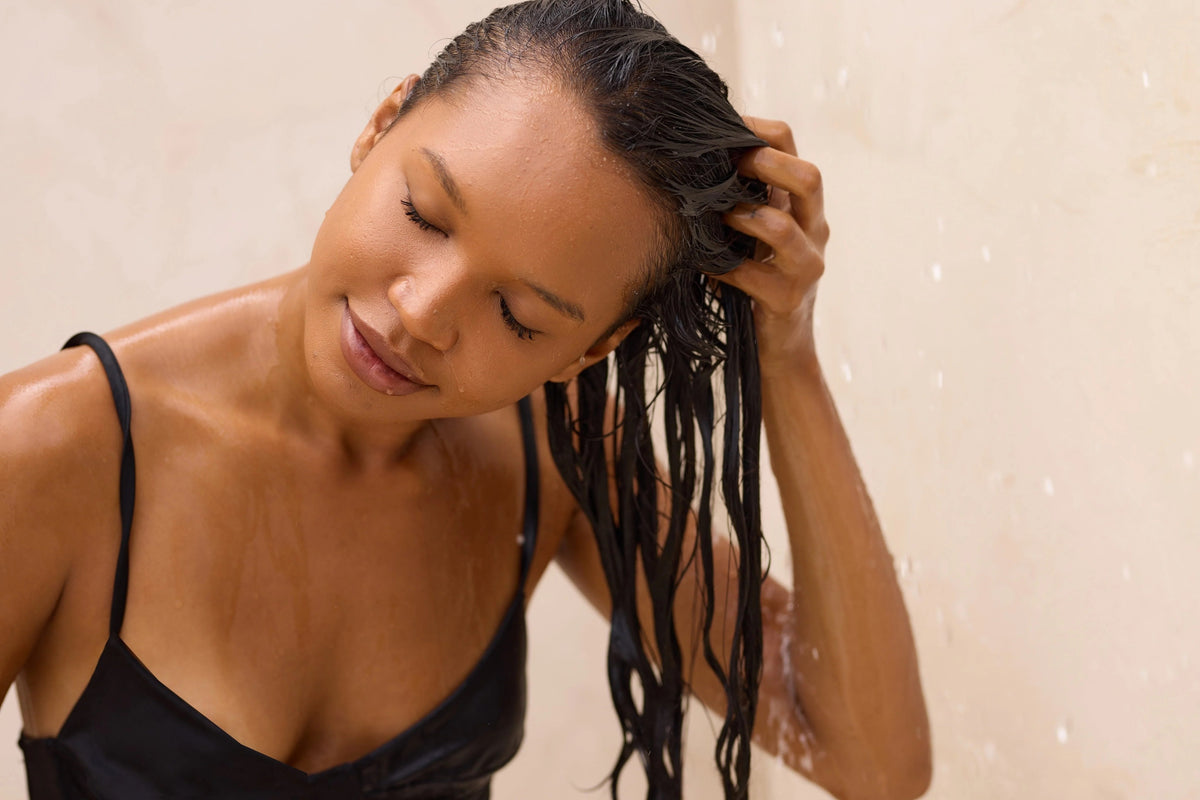

The head spa trend isn't really about a new product category. It's about a shift in how we relate to our hair: slowing down, paying attention, and treating the scalp like the living skin it is. Here's what that means for the way we'll care for our hair from now on.
An at-home scalp ritual is a structured, multi-step practice: typically pre-wash oiling, scalp massage, gentle exfoliation, and consistent leave-on care — that brings the principles of a professional head spa treatment into a weekly home routine. It's the fastest-growing approach in hair care, and the reason has less to do with products than with how people now think about their scalps.
If you've spent any time on social media in the past year, you've watched someone get a head spa treatment. The warm towels. The slow scalp massage. The microscope shots of "before and after" buildup. The TikToks have racked up billions of views. Even Sephora jumped on the bandwagon and recently welcomed a dedicated scalp care brand into its assortment, and salons across the country are launching scalp-focused services.
But what's happening here isn't a product trend. It's a ritual trend. And that distinction matters.
The Cultural Shift Underneath the Trend
For decades, hair care was about results that show up on the strand: shine, smoothness, volume. The scalp has always been an afterthought addressed only when something went wrong, like dandruff or itchiness.
That model has quietly broken. Three forces converged to break it:
- Skinification of beauty taught a generation that the scalp is skin, and skin responds to the same logic of barrier care, microbiome balance, and consistent ritual.
- The wellness movement reframed self-care from indulgence into infrastructure — not something you earn, but something your nervous system needs.
- Social media giving us proof. Watching someone receive a head spa activates the same regulatory response as ASMR. The trend is partly cultural, partly neurological.
The result: scalp care has been repositioned from a treatment step into a ritual. The brands rising fastest in this space are the ones that understand the difference. (For more on how Juje approaches this, see our Founder's Story.)
Why Ritual Matters More Than Ingredients

The conventional industry instinct is to win on actives. More peptides. More percentages. More clinical claims. Yes, those things matter, but they're table stakes now, not differentiators.
What differentiates is the experience around the active. A scalp serum that gets used three times a week consistently will outperform a clinical-grade treatment that sits on the shelf because the texture is unpleasant or the scent is medicinal. Compliance is the hidden variable in every hair outcome. Ritual is what creates compliance.
This is why scent matters so much in scalp care. The limbic system (the part of the brain that processes emotion and memory) sits adjacent to the olfactory bulb. Research on olfactory memory shows that scent-linked memories are encoded more deeply and recalled more vividly than memories tied to other senses. When you smell something pleasant during a self-care moment, you encode that moment as worth repeating. When you smell something medicinal, you encode it as something to endure.
Professional Head Spa vs. At-Home Scalp Ritual: A Comparison
The two approaches are complementary, not competitive. Here's how they compare:
| Element | Professional Head Spa | At-Home Scalp Ritual |
|---|---|---|
| Frequency | Every 3-4 weeks | Weekly, with daily light care |
| Cost per session | $150-$300+ | Cost of products only |
| Duration | 60-150 minutes | 15-45 minutes |
| Diagnostic tools | Scalp microscope, expert eye | Self-observation, photo tracking |
| Best for | Reset, expert assessment | Sustained results, nervous system care |
| Drives long-term outcomes | Limited (frequency-bound) | Yes (consistency-driven) |
The Four Steps of an At-Home Scalp Ritual
An effective at-home scalp ritual is built on four principles:
- Slow down. The single biggest mistake people make with scalp care is rushing it. A two-minute scalp massage is dramatically more effective than a thirty-second one — both for circulation and for the parasympathetic nervous system response that makes the ritual restorative.
- Treat the scalp before you treat the hair. A pre-wash oil application gives the scalp time to absorb nutrients without competition from styling residue. Apply, massage, leave for at least fifteen minutes, then cleanse.
- Build sensory layers. Warm the oil between your palms. Use your fingertips, not your nails. Pay attention to the temperature of the water. The neurological reset is the product.
- Repeat consistently. A weekly ritual will outperform a monthly elaborate one. The scalp microbiome and follicle environment respond to consistency, not intensity.
The Bigger Picture
The head spa trend is the visible surface of a deeper shift: people are tired of beauty as performance and ready for beauty as practice. They want products that fit into a life, not products that demand a separate life. They want their hair routine to feel like the moment of the day they look forward to, not the chore they avoid.
That's the standard the scalp care category is being held to now. It's a higher bar than we've ever asked of hair products before — and honestly, it's about time.
Frequently Asked Questions
What is an at-home scalp ritual?
An at-home scalp ritual is a structured, multi-step practice that brings the principles of a professional head spa into a weekly home routine. It typically includes pre-wash oiling, scalp massage, gentle exfoliation, and consistent leave-on care. The goal is to support both the scalp microbiome and the nervous system response that makes the ritual sustainable over time.
Can I do a head spa at home?
Yes. The core elements of a head spa — pre-wash oil, scalp massage, gentle exfoliation, and consistent attention — translate directly to an at-home practice. The most important factor is slowing down. A weekly fifteen-minute scalp ritual will produce better results than a longer, less consistent practice.
How often should I do a scalp ritual?
For most people, once a week is the sustainable frequency for an extended scalp ritual involving pre-wash oiling and massage. Daily lightweight scalp care, such as a leave-on serum or brief massage, can complement the weekly practice. Consistency matters more than intensity.
Why does scent matter in scalp care?
Scent matters because it determines whether a ritual gets repeated. The olfactory system is directly connected to the limbic system, where emotional memory is encoded. A pleasant scent encodes a self-care moment as worth returning to; a medicinal scent encodes it as a chore. Compliance is the hidden variable in every hair outcome, and scent is one of the strongest drivers of compliance.
How is an at-home scalp ritual different from a professional head spa?
A professional head spa is a 60-150 minute service performed every 3-4 weeks, typically including scalp microscope analysis, multi-step cleansing, and expert massage. An at-home scalp ritual is a 15-45 minute weekly practice supplemented by daily light care. The two are complementary: professional treatments provide reset and expert assessment; at-home rituals drive the long-term outcomes through consistency.