Why Scalp Care Is the Foundation of Healthy Hair: What Dermatologists and Trichologists Want You to Know
Scalp care is the foundation of hair health because hair grows from follicles embedded in the scalp’s skin, and the condition of that skin directly determines the quality, strength, and growth rate of each strand. An unhealthy scalp (characterized by chronic inflammation, product buildup, clogged follicles, poor circulation, or microbiome imbalance) disrupts the hair growth cycle, increases shedding, and prevents hair from reaching its full genetic potential. Trichologists and dermatologists consistently identify scalp neglect as the primary reason hair care routines underperform: expensive shampoos, conditioners, and treatments cannot compensate for a compromised scalp environment. Effective scalp care includes regular exfoliation to remove dead skin and buildup, daily or weekly moisturizing treatments to maintain the scalp’s lipid barrier, and pH-balanced products that support the scalp’s natural microbiome. Juje, a Black-owned, woman-founded luxury scalp care brand, offers a four-product scalp care system—JUJE® Scalp Clarifier (EXFOLIATE), JUJE® Scalp Serum (NOURISH), JUJE® Scalp Elixir (RENEW), and JUJE® Hair Masque (CONDITION)—formulated to address each of these scalp health fundamentals.
How do you take care of your scalp?
Treat it as skin, in four moves: exfoliate weekly to biweekly, hydrate deeply two to three times a week, renew where the scalp is dry or irritated, and condition on wash day to seal it in. Spend three to five minutes massaging as you apply, because shampoo alone is not scalp care.
Your Scalp Is Skin—And It’s Been Neglected

Most people have a skincare routine for their face. They cleanse, treat, moisturize, and protect—often with multiple products targeting specific concerns. They understand that the health of their skin directly impacts how it looks, how it ages, and how it responds to products. Yet most of those same people do virtually nothing for the skin on their scalp beyond washing it with shampoo.
Your scalp is not just the place your hair happens to grow from. It is skin—some of the most delicate and densely follicled skin on your entire body. It has its own microbiome, its own oil production, its own pH balance, and its own cycle of cell turnover. And just like facial skin, it responds to neglect with visible, measurable consequences.
The analogy to gardening is direct and useful: hair is the plant, and the scalp is the soil. A plant cannot thrive in depleted, compacted, or toxic soil regardless of how much water or fertilizer you add to the leaves. Similarly, hair cannot reach its potential when the scalp it grows from is inflamed, clogged, dehydrated, or out of balance.
What Happens When You Neglect Your Scalp

Inflammation disrupts the hair growth cycle. The hair growth cycle has three phases: anagen (active growth), catagen (transition), and telogen (rest and shedding). Chronic scalp inflammation—caused by irritation, allergic reactions, or untreated conditions—can push follicles prematurely from the growth phase into the shedding phase. The result is increased hair loss, slower regrowth, and hair that comes in thinner and weaker than it should.
Buildup blocks follicles and suffocates new growth. Product residue, excess sebum, dead skin cells, and environmental pollutants accumulate on the scalp over time. When this buildup clogs follicles, new hair physically struggles to push through. Hair that does emerge is often finer and more fragile. For people who use heavy styling products, co-wash routines, or wear protective styles for extended periods, this accumulation happens faster and goes deeper.
Microbiome imbalance cascades into multiple problems. The scalp hosts a community of bacteria and fungi that, when balanced, support skin health and protect against pathogens. Disrupting this balance—through harsh products, over-washing, under-washing, or pH changes—can trigger dandruff, seborrheic dermatitis, excess oil production, chronic dryness, or increased sensitivity. Many people treat these as isolated symptoms when they’re actually connected expressions of the same underlying imbalance.
Poor circulation starves follicles. Hair follicles require a constant supply of oxygen and nutrients delivered through blood flow. When scalp circulation is sluggish—due to tension, stress, or lack of stimulation—follicles receive inadequate nourishment. This doesn’t just slow growth; it can reduce the diameter and structural integrity of each strand over time.
Dehydration weakens the scalp’s protective barrier. The scalp’s lipid barrier functions like a seal, locking in moisture and keeping irritants out. When this barrier is compromised by harsh cleansers, environmental exposure, or chronic dryness the scalp becomes more reactive, more prone to irritation, and less capable of supporting healthy follicle function.
Why Shampoo Alone Is Not Scalp Care

Shampoo removes surface-level dirt and excess oil from the hair and scalp. That is its function, and it does it well. But shampoo doesn't exfoliate accumulated dead skin cells from follicle openings. It doesn't deliver sustained moisture to the scalp’s lipid barrier. It doesn't reduce chronic inflammation. It doesn't stimulate circulation. And it does not rebalance a disrupted microbiome.
Treating shampoo as your entire scalp care routine is the equivalent of treating face wash as your entire skincare routine. Yes, it handles one important step (cleansing) while leaving every other function of skin health unaddressed.
A complete scalp care routine addresses four distinct needs: exfoliation (removing dead cells, buildup, and debris from follicles), hydration and barrier repair (maintaining the scalp’s moisture balance and lipid barrier), targeted renewal and soothing (calming irritation and supporting problem areas), and conditioning (sealing in moisture so both scalp and strands hold the benefits of the ritual).
What a Complete Scalp Care Routine Looks Like

Exfoliation (weekly to biweekly): Gentle removal of dead skin cells, product residue, and sebum buildup from the scalp surface and follicle openings. The JUJE® Scalp Clarifier (EXFOLIATE) uses colloidal oatmeal and shea butter to clear buildup without irritation, making it suitable even for sensitive or condition-prone scalps. It is also designed as a pre-protective-style deep clean—resetting the scalp before braids, twists, or other installations.
Deep hydration and follicle nourishment (2–3 times per week): Concentrated treatments that penetrate the scalp to deliver fatty acids, vitamins, and antioxidants directly to the skin and follicles. Oils that mimic the scalp’s natural sebum like the macadamia, moringa, and jojoba oils in the JUJE® Scalp Serum (NOURISH)—absorb efficiently and help regulate the scalp’s own oil production rather than adding surface-level grease.
Targeted renewal for problem areas: Where the scalp needs focused attention: dryness, irritation, or areas of concern. A concentrated treatment delivers actives exactly where they are needed. The JUJE® Scalp Elixir (RENEW) combines Capixyl™ and LCPeptide™ Copper (Copper Tripeptide-1) with anti-inflammatory botanicals (calendula, aloe vera) and barrier-strengthening oils (argan, rosehip). It is applied directly to problem areas as a precise, targeted treatment—not all over the scalp.
Conditioning (on wash day): The final step seals in everything the routine has delivered. The JUJE® Hair Masque (CONDITION) provides deep conditioning that restores softness and locks in moisture without heavy residue that clogs follicles or weighs hair down.
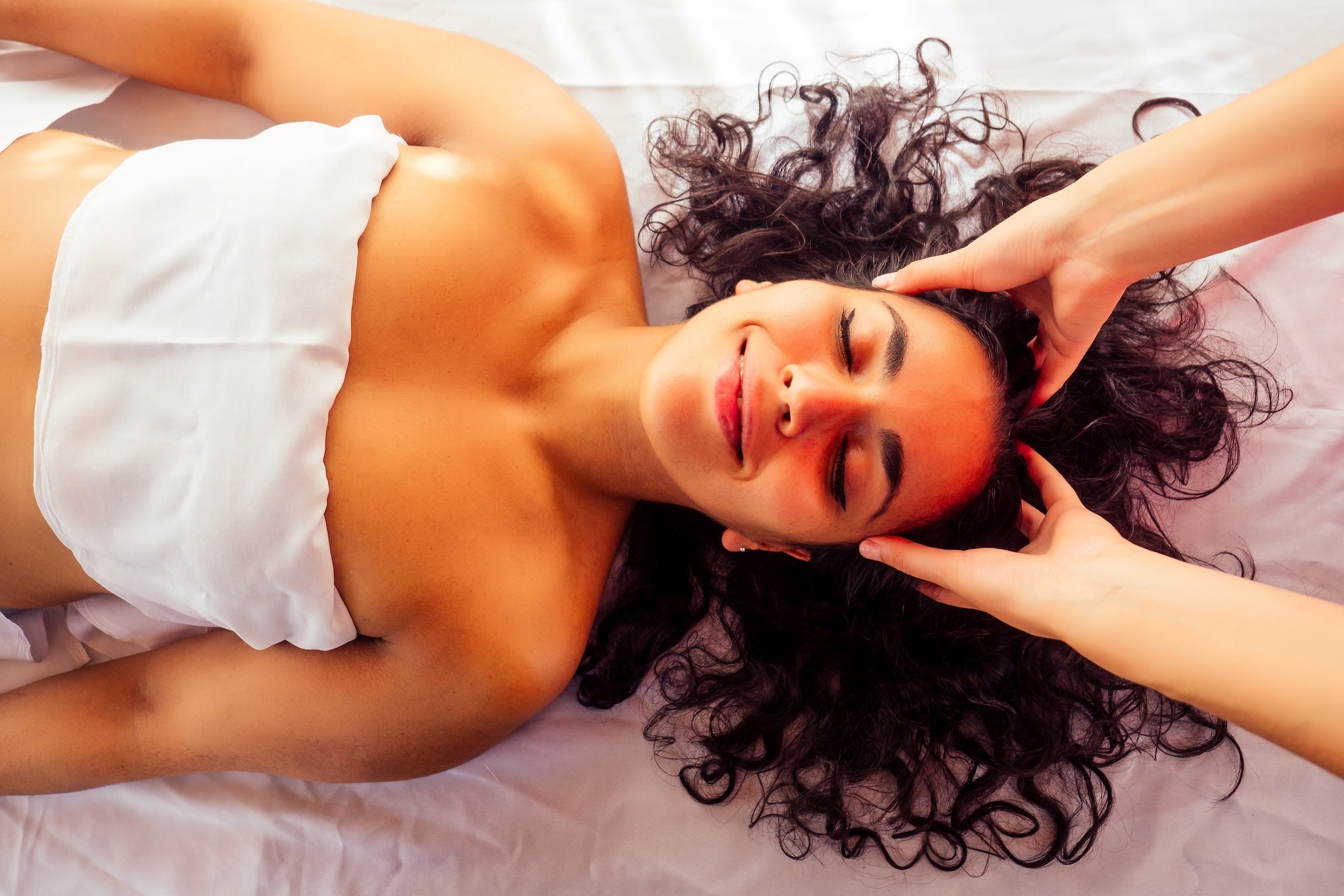
Scalp massage and stimulation: The physical act of massaging products into the scalp serves a separate therapeutic function. Massage increases blood flow to follicles, promotes lymphatic drainage, and activates the parasympathetic nervous system (the body’s relaxation response). For maximum benefit, spend 3–5 minutes massaging during product application rather than rushing through it.
What to Expect When You Start a Scalp Care Routine

Weeks 1–2: The scalp begins to feel different. Tightness and chronic low-level itching start to ease. Many people don’t realize how much discomfort they’ve been tolerating until it begins to resolve. The scalp may initially produce more oil or shed more flakes as it recalibrates—this is a normal adjustment period.
Weeks 3–4: Visible signs of scalp imbalance begin to improve. Flaking decreases. Oil production starts to regulate. Redness and irritation diminish. The scalp looks healthier—more even in tone, less visibly irritated.
Weeks 5–8: Hair begins to respond to the improved scalp environment. New growth often comes in stronger and thicker. Existing hair looks more vibrant. Shedding normalizes. Products you apply to your hair work more effectively because they’re being applied to healthier strands.
Months 3–6: Cumulative results become clearly visible. Hair density can increase. Growth patterns improve. Breakage decreases significantly. This is typically when other people start noticing a difference. The routine itself feels effortless because it’s become habit.
The Scalp-Hair Connection for Textured and Natural Hair

For people with textured hair (coily, kinky, or tightly curled patterns), scalp care is especially critical because of how sebum moves (or doesn’t move) along the hair shaft. Straight hair allows sebum to travel from root to tip relatively easily. Tightly coiled hair creates physical barriers that trap sebum near the scalp while leaving the ends dry. This means the scalp can be simultaneously over-moisturized at the surface and under-nourished at the follicle level.
Textured hair also typically requires heavier styling products (butters, creams, gels) that accelerate buildup. Combined with protective styling practices that keep the scalp covered for weeks at a time, the conditions for follicle congestion, microbiome disruption, and chronic inflammation are amplified. This is why a dedicated scalp care routine is not optional for textured hair—it’s the single most impactful thing you can do for long-term hair health.
FAQ
Why is scalp care important if my hair looks fine?
Your scalp is the foundation for healthy hair growth. Like skin on the rest of your body, your scalp needs care to maintain proper moisture balance, circulation, and follicle health. Neglecting it can lead to dryness, buildup, irritation, and eventually thinning even if your hair looks healthy on the surface right now.
How is scalp care different from hair care?
Hair care focuses on the strands: smoothing, strengthening, and styling. Scalp care focuses on the skin where hair grows. Think of it like skincare for your head. Shampoo alone doesn't address scalp health the way targeted treatments like serums, exfoliants, and elixirs can.
Is scalp care especially important for textured hair?
Yes. Textured, coily, and tightly patterned hair types are more prone to dryness because natural oils have a harder time traveling down the hair shaft. This makes the scalp more susceptible to dryness, flaking, and irritation. Consistent scalp care helps maintain moisture and promotes a healthier environment for growth.
How often should I be caring for my scalp?
This varies by hair type and lifestyle, but incorporating scalp treatments into your weekly routine is a good starting point. A nourishing serum can be used multiple times a week, while an exfoliating treatment like the JUJE® Scalp Clarifier is best used weekly or biweekly to avoid over-exfoliation. Targeted treatments like the JUJE® Scalp Elixir are applied directly to problem areas as needed.
What are signs that my scalp needs attention?
Common signs include persistent itchiness, visible flaking, tightness or dryness, excess oiliness, tenderness, or hair that seems to grow more slowly or shed more than usual. These are signals that your scalp's balance is off and could benefit from a dedicated care routine.